
30 Jan 2026
Updated free CRVS e-learning Course from the World Bank
TAGS

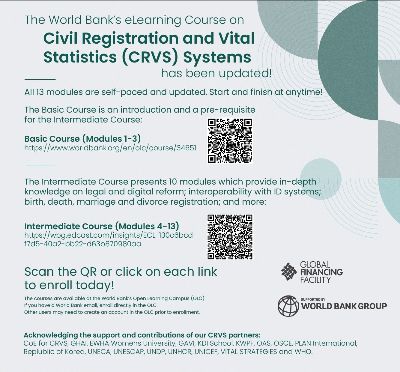
The World Bank has released an updated version of its free Civil Registration and Vital Statistics (CRVS) e-learning course, revised to offer a more flexible, self-paced learning experience. Hosted on the Open Learning Campus, the refreshed 13‑module program delivers essential training for professionals seeking to modernize the recording of life events. Developed in collaboration with international partners and academic experts, the updated content reflects the latest global standards and best practices for strengthening civil registration systems.


The course is structured into two levels: a Basic Course (Modules 1–3), which introduces core CRVS concepts, and an Intermediate Course (Modules 4–13), which explores more advanced technical and policy topics. Open enrollment is available now.


Access the Basic Course (Module 1 - 3) here.
More News

22 January 2021

Newsletter: CRVS Insight January 2021 CRVS Champion: Ms. Nazaria Baharudin Each month, our…

14 December 2020

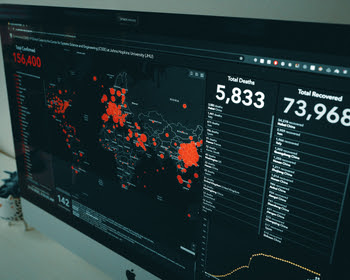
(Newsletter: CRVS Insight December 2020) The COVID-19 pandemic is challenging country mortality…

14 December 2020

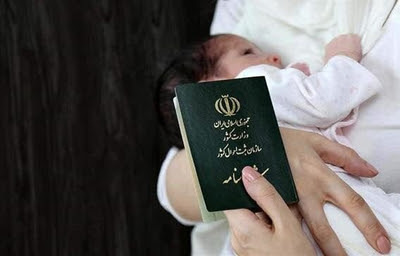
(Newsletter: CRVS Insight December 2020) In Iran, in November of 2019, the first Iranian identity…

14 December 2020

(Newsletter: CRVS Insight December 2020) Each month, our community newsletter puts a spotlight on…

14 December 2020

(Newsletter: CRVS Insight December 2020) Regional Steering Group members, Ms. Kamni Naidu (Fiji),…

24 November 2020

(Newsletter: CRVS Insight November (2) 2020) In preparation for the Second Ministerial Conference…

24 November 2020

(Newsletter: CRVS Insight November (2) 2020) Following a number of years of consultations and…

24 November 2020

(Newsletter: CRVS Insight November (2) 2020) In a major step toward universal registration, the…

24 November 2020

(Newsletter: CRVS Insight November (2) 2020) The ESCAP CRVS team is proud to announce the launch…

03 November 2020

(Newsletter: CRVS Insight November 2020) Women and children are often vulnerable to being left…