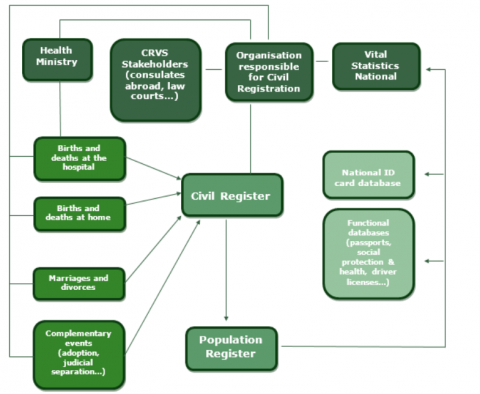

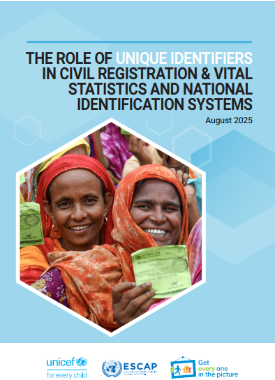
Unique identifiers are a key tool for countries aiming to build more resilient and inclusive digital public infrastructure. A recent report developed by United Nations Child’s Fund (UNICEF) and Economic and Social Commission for Asia and the Pacific (ESCAP) together with the UN Legal Identity Agenda Task Force highlights their critical role in linking civil registration and vital statistics (CRVS) systems with national identification frameworks, a move that is central to improving governance and service delivery.
By enabling seamless data exchange, unique identifiers, such as a national ID number, help reduce duplication and ensure timely access to essential services like healthcare, education, and social protection. The integration of CRVS and national ID systems enhances legal identity coverage from birth, providing a stronger foundation for managing population data.
The report emphasizes that successful implementation of this strategy hinges on robust legal frameworks, strong data protection measures, and effective institutional coordination.
The report can be accessed here.
ESCAP, UNICEF and the UN Legal Identity Agenda (UNLIA) Task Force recently organised a Stats Cafe session exploring the role of UINs in civil registration systems, their applications in governance and statistics, and the principles for designing inclusive and secure identifier systems. The Stats Café featured discussion based on the UNICEF/ESCAP report.
You can see the recording of and presentations from the Stats Cafe session here.